
Veneers vs. Crowns: What’s the Difference and Which One Is Right for You?
If you’re exploring ways to enhance your smile, you’ve probably come across the debate around dental veneers vs. crowns. Both treatments are popular in modern dentistry and can dramatically improve your smile, but they’re designed for different purposes.
So, how do you know which one is right for you?
In this guide, we’ll walk you through the real veneer vs. crown difference, using simple language, practical examples, and expert-backed insights. Whether your goal is improving tooth appearance or restoring a damaged tooth, this blog will help you make a confident, informed decision.
Understanding the Basics: Veneers vs Crowns
Before diving into comparisons, let’s start with a quick overview of each treatment.
What Are Dental Veneers?
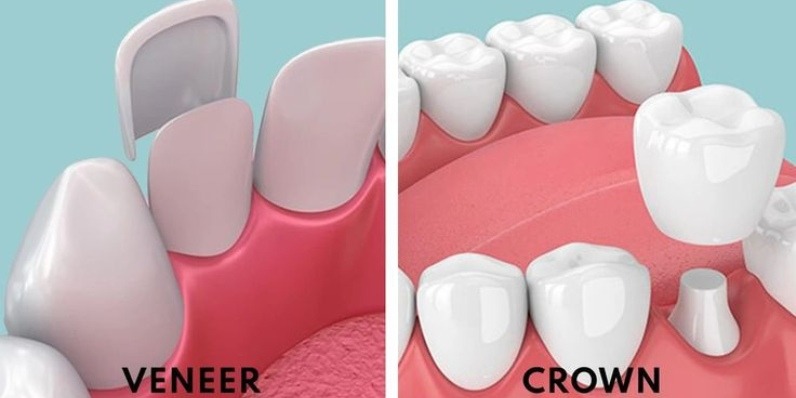
Dental veneers are thin, custom-made shells placed on the front surface of your teeth. They are primarily used for cosmetic purposes.
Best For:
- Stained or discolored teeth
- Minor chips or cracks
- Small gaps between teeth
- Slightly uneven or misshapen teeth
Veneers are a go-to option when your teeth are healthy but you want a more polished, symmetrical smile.
What Are Dental Crowns?
Dental crowns, often referred to as caps, cover the entire tooth. They are used to restore strength, function, and appearance.
Best For:
- Severely damaged or cracked teeth
- Teeth with large fillings
- Teeth after root canal treatment
- Advanced decay or structural weakness
Crowns are more about protection and restoration than purely cosmetic enhancement.
Dental Veneers vs. Crowns: Key Differences
When comparing dental veneers vs. crowns, the main difference comes down to how much of the tooth is covered and why the tooth treatment is needed.
1. Coverage and Structure
- Veneers: Cover only the front surface of the tooth
- Crowns: Cover the entire tooth
This feature makes crowns a better choice for damaged teeth, while veneers are ideal for surface-level improvements.
2. Purpose of Treatment
- Veneers: Focus on improving tooth appearance
- Crowns: Restore both function and strength
If your concern is purely cosmetic, veneers are often the preferred solution. But if your tooth is weakened, a crown is usually necessary.
3. Tooth Preparation
- Veneers: Require minimal enamel removal
- Crowns: Require more extensive reshaping
Because crowns involve more preparation, they are considered a more invasive procedure compared to veneers.
4. Durability and Lifespan
- Veneers: Typically last 10–15 years
- Crowns: Can last 15–20+ years with proper care
Both options are durable, but crowns generally last longer due to their full coverage.
Materials Used in Veneers and Crowns
Understanding the materials can also help you decide between veneers and crowns.
Veneers Materials
- Porcelain (natural-looking and stain-resistant)
- Composite resin (more affordable, less durable)
Crowns Materials
- Porcelain or ceramic
- Porcelain-fused-to-metal
- Gold or metal alloys
Your dentist will recommend the best material based on your needs, especially if the tooth is visible when you smile.
Procedure: What to Expect
Veneers Procedure
- Initial consultation and smile design
- Minimal enamel removal
- Impressions taken for custom veneers
- Final bonding
The process is relatively quick and minimally invasive.
Crowns Procedure
- Tooth reshaping
- Impressions and temporary crown placement
- Final crown fitting and cementing
This process may take a bit longer due to the level of preparation involved.
When Are Veneers the Better Choice?
Veneers are ideal when your teeth are structurally sound but need cosmetic improvement.
Common Scenarios
- You want a brighter, whiter smile that whitening can’t achieve
- Your teeth have minor chips or uneven edges
- You’re looking for a smile makeover
Real-Life Example:
A patient with slightly crooked and stained front teeth may choose veneers to achieve a uniform, camera-ready smile without orthodontics.
When Are Crowns the Better Option?
Crowns are necessary when the tooth is damaged or weakened.
Common Scenarios
- A tooth is cracked or broken
- You’ve had a root canal
- There’s significant decay
Real Life Example:
A patient who cracks a molar while chewing would benefit from a crown to restore strength and prevent further damage.
Veneers vs. Crowns for Front Teeth
When it comes to front teeth, aesthetics play a major role.
- Veneers: Preferred for natural-looking cosmetic improvements
- Crowns: Used when the front tooth is significantly damaged
For patients comparing veneers vs. crowns in Houston, TX, dentists often recommend veneers for visible teeth unless structural support is needed.
Perspective: Why Expert Guidance Matters
Choosing between veneers and crowns isn’t just about preference; it’s about proper diagnosis and professional guidance.
Experience
Patients who consult early often achieve better, longer-lasting results.
Expertise
Dentists use digital imaging and thorough exams to determine whether veneers or crowns are appropriate.
Authority
Trusted dental clinics follow proven protocols to ensure safety, aesthetics, and durability.
Trust
Clear communication, transparent pricing, and personalized treatment plans help build confidence in your decision.
Working with an experienced dental professional ensures that your choice between dental veneers vs. crowns is both safe and effective.
Understanding the veneers vs. crowns difference is key to making the right choice for your smile. Veneers are perfect for improving tooth appearance, while crowns are essential for restoring strength and function.
If you’re unsure which option suits your needs, a professional consultation is the best next step. Whether you’re exploring dentists in Old Spanish Trl, Houston, 77054 or simply looking to enhance your smile, the right treatment can make all the difference.
Frequently Asked Questions (FAQs)
1. Which is better: veneers or crowns?
It depends on your needs. Veneers are best for cosmetic improvements, while crowns are better for restoring damaged teeth.
2. Are veneers more natural-looking than crowns?
Yes, veneers are often preferred for front teeth because they provide a more natural, aesthetic appearance.
3. Do crowns last longer than veneers?
Generally, yes. Crowns tend to last longer because they cover and protect the entire tooth.
4. Is the procedure painful?
Both procedures are performed under local anesthesia, so discomfort is minimal.
5. Can I switch from veneers to crowns later?
In some cases, yes, especially if the tooth becomes damaged over time.
Ready to upgrade your smile with confidence?
Schedule your consultation today and discover whether veneers or crowns are the perfect fit for you!